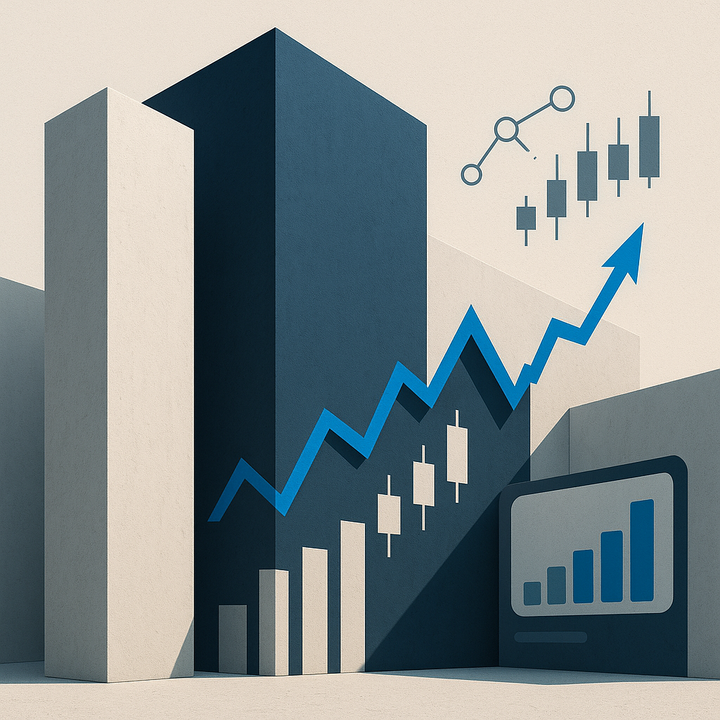
How to Use Financial Analysis for Personal Decision-Making
Introduction: The Increasing Value of Financial Analysis Personal Decisions
Financial analysis personal decisions shape outcomes in a world of financial complexity. Today, understanding financial analysis is not just for executives or accountants. It supports daily decisions that influence security and long-term wealth. Because spending, saving, and investing each carry risks and potential, using financial analysis builds a solid foundation to guide your actions.
Financial analysis helps you organize personal finances, clarify priorities, and recognize risk in ways that intuition alone cannot. This discipline turns data from passive records into action-oriented insights for every aspect of life. For example, you can apply it when buying a home, planning retirement, starting a business, or coping with unexpected expenses.
Defining Financial Analysis in the Personal Finance Context
At its core, financial analysis for personal decisions means applying structured assessments to your finances. This approach goes beyond tracking checking account balances or reviewing credit card statements. Instead, you interpret income, expenses, investments, and debt using ratios and benchmarks to evaluate your financial position.
Common tools include personal balance sheets, budget trackers, cash flow statements, and investment summaries. Individuals use ratios like debt-to-income, savings rate, and return on investment to uncover strengths and flag weaknesses. For example, a high debt-to-income ratio shows over-leverage. In contrast, a low savings rate signals inadequate preparation for emergencies or goals.
Applying financial analysis to personal decisions means translating life plans—like college, buying real estate, healthcare, or family events—into actionable and measurable financial targets. With this approach, you can convert abstract goals into numbers. This helps you detect gaps and choose suitable strategies.
Why Is Financial Analysis Critical for Personal Decision-Making?
Individuals now face financial environments marked by fluctuating interest rates, rapid technological change, and a growing set of investment products. Without analysis, people may overlook opportunities, underestimate risks, and make uninformed choices that harm their future.
Financial analysis supports you in anticipating and adapting to these challenges. For instance, when you compare investment options or consider taking on debt, thorough analysis clarifies both short-term returns and long-term consequences. This process supports better asset allocation, enhances discipline, and fosters a mindset of critical, evidence-based decision-making.
Research in behavioral economics shows that structured, data-driven approaches outperform impulsive decisions. Financial analysis reduces emotional noise, suppresses biases, and aligns actions with life objectives. This discipline increases your likelihood of success, whether you are making small budgeting choices or major investment moves.
The Building Blocks of Financial Analysis for Personal Decisions
Launching a routine of financial analysis starts with diligent data collection. This process includes:
– Tracking all income sources, from salary to passive and side hustles.
– Categorizing expenses by necessity (housing, food, transportation) and discretion (entertainment, vacations).
– Listing all debts, such as mortgages, credit cards, student loans, and their respective terms.
– Recording assets and investments, including retirement accounts, stocks, bonds, and real estate.
– Maintaining periodic snapshots (monthly or quarterly) to reveal trends and seasonal variations.
Once you gather and organize the data, apply ratio analysis. For example, monitor liquidity by checking how much cash or near-cash equivalents you hold relative to short-term obligations. Calculate your net worth at least annually. Evaluate your risk exposure by measuring your portfolio’s diversification, reviewing asset concentration, or simulating economic downturns.
Financial Analysis Personal Decisions in Practice: Strategies and Tools
To truly leverage financial analysis for personal decisions, use practical tools and practices. Budgeting software and platforms like Mint, YNAB (You Need A Budget), or Personal Capital centralize data and automate cash flow analysis. Spreadsheet models let you tailor calculations, track savings goals, or project scenarios.
Scenario analysis is a hallmark of effective financial analysis. For example, develop best-case, worst-case, and median-case assumptions on job income or investment returns. Stress test your finances for spikes in healthcare costs, job loss, or sudden market corrections. By visualizing these potential impacts, you can prepare contingency plans and build financial buffers.
Regularly reviewing and rebalancing your investment portfolio ensures alignment with risk tolerance and market changes. Financial ratios—such as return on investment, expenses to income, or liquidity ratios—offer quantitative benchmarks for progress. Automation helps, but qualitative review matters too. Reflect on whether your spending aligns with your values or if new opportunities merit reallocating resources.
Risk Identification and Mitigation Guided by Financial Analysis
Financial analysis brings clarity to both risks and opportunities. Typical risks uncovered through personal financial analysis include:
– Excessive reliance on variable income (such as commission-based work)
– High levels of unsecured debt or inadequate emergency funds
– Investment portfolios that are too concentrated (for example, only tech stocks or crypto)
– Insufficient insurance coverage for health, property, or liability
By quantifying these risks, you gain power to address them directly. You can develop cash reserves, diversify holdings, or adjust spending habits. On the other hand, disciplined analysis may reveal underappreciated opportunities, such as tax-efficient strategies, employer matching on retirement contributions, or high-yield savings accounts.
Financial analysis also highlights behavioral risks. Overconfidence, loss aversion, and herd mentality influence personal financial choices. Adopting a systematic, analytical method reduces these biases and supports more rational outcomes.
Leveraging Financial Analysis to Support Major Life Decisions
Major life choices—buying a house, starting a family, pursuing further education, or becoming self-employed—carry multidimensional risks. Using financial analysis, you can:
– Model cash flows before taking on a mortgage, factoring in taxes, maintenance, and potential income disruption.
– Project education costs and funding needs for children or yourself, including realistic timelines.
– Plan for career transitions by estimating the impact on cash flow, benefits, and risk exposure.
– Evaluate the feasibility and risk of entrepreneurship or side businesses using expected returns, breakeven analysis, and sensitivity scenarios.
Integrating financial analysis into these pivotal moments enhances your confidence and agility to manage change. With metrics in place, making course corrections becomes easier.
Technology’s Impact on Personal Financial Analysis
Financial technology (fintech) has democratized financial analysis for personal decisions. Digital solutions now aggregate data, automate categorization, and provide instant reports on spending, investment performance, and net worth. Robo-advisors use algorithms to develop tailored investing strategies based on risk tolerance and time horizon.
Mobile apps facilitate real-time tracking of transactions, notifications, and reminders to prevent overspending or missed payments. Platforms driven by artificial intelligence highlight savings opportunities and predict financial shortfalls before they become critical. These tools lower the barriers to analysis, making it accessible even for people with limited financial knowledge.
However, technology is not foolproof. You should check app security, watch for account aggregation errors, and supplement automated reports with qualitative reviews. Staying educated about the latest fintech innovations is essential to maximize the benefits and protect your sensitive data.
Data Integrity and the Boundaries of Financial Analysis
The accuracy of your personal financial analysis depends on data quality. Outdated, incomplete, or miscategorized entries distort results and can lead to poor decision-making. Therefore, establish regular routines for reconciliation and review. Integrate diverse data sources—checking accounts, retirement plans, and manually added assets or liabilities.
It is also important to recognize the limits of quantitative analysis. Not all crucial information is numerical. Changes in family makeup, health status, or professional aspirations are qualitative and may not be fully captured by ratios or models. You should blend these insights with financial analysis for a holistic view.
Market turbulence, regulatory shifts, and technology failures can cause analytical models to break down. Consequently, arrange periodic reviews and respond quickly to unexpected events or major life changes.
Tax, Regulation, and External Influences
External factors significantly influence personal finances. Tax law changes affect take-home pay, the attractiveness of certain investments, and overall tax efficiency. Regulatory shifts can impact asset values, insurance costs, or borrowing rates.
A robust financial analysis protocol accounts for these elements. Run what-if scenarios reflecting new tax rates, changes in deductions, or inflationary environments. Adjust cash flow models to reflect likely impacts, and consult reputable sources for major revisions.
Global events, such as economic downturns or geopolitical instability, further amplify uncertainty. Therefore, continually updating your analysis ensures you do not rely on outdated assumptions when facing new challenges.
Best Practices for Building Effective Personal Financial Analysis
To get the most value from financial analysis for personal decisions, follow these best practices:
1. Establish formal routines for collecting and updating financial data on a schedule.
2. Pair automated tracking with manual reviews to catch errors or context-specific risks.
3. Set measurable, time-bound goals that connect with your personal values.
4. Use clear dashboards and metrics to visualize progress toward your targets.
5. Regularly benchmark your status against broader economic conditions and peer groups.
6. Stay proactive about financial literacy by learning from books, courses, or professionals.
7. Integrate qualitative factors—such as career ambitions or family plans—into your financial roadmap.
8. Adjust strategies periodically to incorporate new information, market shifts, or life events.
Applying these habits elevates your ability to interpret data and act on your findings, instead of simply reacting afterward.
Continuous Learning and Adaptation: Keys to Long-Term Success
The financial environment is dynamic. Adapting is essential to maintain success. Commit to lifelong learning by seeking updates on financial analysis methods, tools, and economic trends. Engage with professional advisors for complex cases or when entering new investing arenas.
Review your approach regularly, especially after significant events such as job changes, economic shocks, or new family responsibilities. Remain flexible and use each review cycle to refine your understanding of what works.
Peer communities, financial podcasts, and independent research offer additional perspectives that supplement data-driven models. As you refine your skills, you become better equipped to harness the power of financial analysis for your benefit.
Conclusion: Integrating Financial Analysis for Better Decisions
Personal success today depends on using financial analysis to inform every aspect of money management. By embracing structured analysis, you minimize uncertainty, reach your goals more efficiently, and create buffers against shocks. The best results come from blending data with self-awareness and a willingness to adapt.
Financial analysis is not a one-time project but a lifelong companion in your decision-making journey. To discover deeper techniques and strategies within this discipline, visit our resource center on Advanced Personal Finance.

Camila Duarte is a financial content strategist and personal finance writer focused on helping readers build structured, long-term financial stability. Her work explores how budgeting systems, income management, credit behavior, and disciplined investing interact to create sustainable financial growth. Instead of promoting shortcuts or trend-driven advice, Camila emphasizes clarity, practical frameworks, and responsible decision-making grounded in real-world financial dynamics.