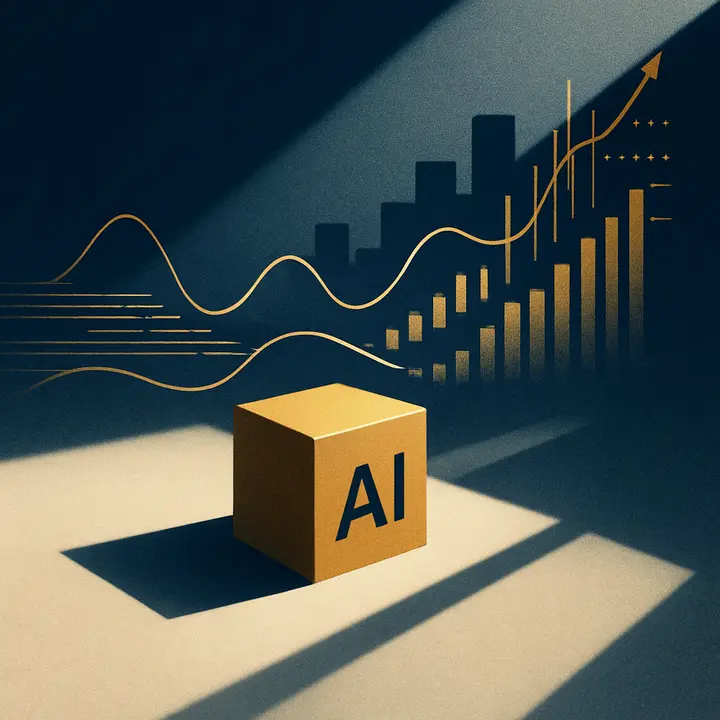
Guide to How Artificial Intelligence Is Transforming Long-Term Investments in 2025
Introduction: The Strategic Shift Toward AI in Long-Term Investments
AI in long-term investments is fundamentally transforming financial markets. It creates modern approaches that influence investors at all levels. In 2025, artificial intelligence is not just an additional tool. Rather, it is at the core of many institutional portfolios. Retail portfolios are also adopting it rapidly.
The rapid evolution of machine learning means the entire landscape is changing. Data analytics and predictive technologies make investing highly data-driven. Consequently, the process is now more automated and complex than ever before. This comprehensive guide analyses how artificial intelligence is influencing long-term investments. We explore the possible advantages and pitfalls. Furthermore, we outline practical strategies for investors to harness the power of AI for sustained success.
What Is Artificial Intelligence in the Investment Context?
In the context of investing, artificial intelligence refers to sophisticated algorithms. These systems process huge amounts of data efficiently. They find trends and make recommendations with minimal human intervention. Major financial institutions use AI and machine learning to manage portfolios. They also use it to detect unusual patterns and predict market shifts. Additionally, they automate front- and back-office processes.
Predictive analytics mixes historical and real-time data. This helps investors make informed choices on asset allocation. Risk management is also improved significantly. AI platforms often utilize natural language processing. This extracts valuable information from news reports and earnings calls. Analyst opinions and even social media discussions are analyzed.
AI then feeds these insights into pricing models. Robo-advisors, powered by AI, have democratized access. They put algorithms once reserved for institutional players into the hands of everyday investors. In 2025, the scope of AI in finance is vast. It covers everything from automated trade order routing to highly detailed scenario analysis.
Why AI Matters to Long-Term Investors in 2025
The importance of AI in long-term investments comes from its power. It brings efficiency and better risk management. Potentially higher returns are also a key benefit. Pension funds and sovereign wealth funds benefit from AI’s speed. Individual retirement investors do as well. AI excels in detecting hidden economic and capital market trends.
Where a human team may take weeks to assess new data, AI models react almost instantly. This gives investors a competitive edge. AI in long-term investments also helps reveal macroeconomic cycles. Company-specific developments are analyzed with a depth that was previously impossible.
For those pursuing factor investing, AI uncovers new drivers. It integrates ESG (Environmental, Social, and Governance) metrics with classic numbers. AI-powered investing supports forward-looking thematic allocations. Examples include portfolios focused on clean energy or healthcare. It mines massive data sets for signals others might miss. The use of alternative data gives long-term investors a sharper analytical advantage. Thus, AI is central to smarter investment planning in 2025.
AI in Long-Term Investments: Practical Strategies
Successfully using AI in long-term investments requires deliberate planning. A strong foundation in data quality is essential. The most robust AI models only function with accurate data. Investors need to evaluate the underlying datasets carefully. Cleanliness, structure, and representation are key factors. Without this groundwork, even advanced algorithms can fail.
Another critical element is model transparency. Regulators and asset owners are raising concerns about ‘black box’ risks. It’s not always clear why a model recommends a certain trade. Investors must prioritize platforms that demonstrate how decisions are made. Portfolio rebalancing is one key example where AI excels.
Algorithms can monitor exposures and asset weights. They track volatility and market correlations in real time. They automatically execute changes based on strategic guidelines. AI-driven scenario analysis allows asset managers to test portfolios. They can see how assets respond to extreme events. This approach enhances resilience significantly. It makes risk control more dynamic.
For diversified portfolios, AI systems help identify asset classes. They determine which equities or fixed income assets might outperform. Commodities and alternatives are also evaluated based on shifting environments. Many leading asset managers pair AI with traditional methods. These hybrid strategies combine speed with human experience. This leads to more adaptable investment approaches.
Main Risks of AI-Driven Investment Models
Despite its strengths, using AI in long-term investments brings unique risks. The four key categories are distinct. They include model risk, overfitting, model drift, and operational risks. Model risk is the danger that AI algorithms may misinterpret signals. This leads to costly exposures.
Overfitting is when a model relies too heavily on past data. This makes it less capable during changing market regimes. In volatile periods, this can cause outsized losses. Model drift happens when relationships in the data change. This can be due to structural market evolution. Unexpected events also cause drift.
If investors don’t update AI models, predictive accuracy declines fast. Operational risks include technical failures and outages. Cyberattacks are also a concern. With many managers adopting similar AI models, concentration risk grows. If many respond to the same signals, crowded trades occur. This can cause market instability.
Regulatory risks are also important. In 2025, authorities are increasing their focus. The SEC and European regulators focus on data privacy. Transparency and systemic stability are top priorities. Investment firms must carefully audit algorithms. They must document model logic and address bias. Human oversight remains essential. Technology should support, not replace, financial professionals.
Opportunities Powered by AI in Modern Portfolios
AI-driven long-term investment strategies unlock new alpha sources. They improve operational efficiency significantly. They scan for hidden market anomalies. Inefficiencies and factors that human analysis might miss are detected. For instance, AI can spot subtle supply chain disruptions. It does this by analyzing geolocation and logistics data.
Shifting consumer sentiment is identified via online reviews. Asset managers use these insights to anticipate sector rotations. They can spot global economic changes earlier. The democratization of AI allows individual investors access. They get tools once only available to large institutions.
Personalized investment strategies are now tailored. They use AI and machine learning to match a client’s risk appetite. Time horizon and financial goals are also considered. AI platforms facilitate rapid integration of new asset classes. Cryptocurrencies and green bonds are examples. Moreover, AI optimizes trade execution. It automates order routing and minimizes trading costs. As open banking grows, investors connect disparate portfolios. This streamlines reporting and decision-making.
Traditional vs. AI-Driven Investment Approaches in 2025
Traditional long-term investment methods rely on human judgment. Fundamental research and disciplined process management are key. The focus remains on long-term economic drivers. Company earnings and industry trends are analyzed. Passive index strategies remain core.
AI-driven investing, on the other hand, emphasizes automation. Adaptive learning is central. Algorithms quickly test thousands of hypotheses. They adjust portfolios on the fly. Real-time monitoring detects market risks. Opportunities are spotted ahead of traditional timelines.
The combination of both approaches is gaining favor in 2025. Hybrid models use AI for speed and depth. Skilled managers provide context and strategic vision. Critical oversight is maintained. AI’s scale is transformative. Models analyze immense data sets across global markets simultaneously. This enables portfolio customization that manual analysis cannot match. Nevertheless, human experience remains essential. In times of crisis, it is vital. Investors achieve the best results by blending AI-driven insights with human understanding.
AI in Long-Term Investments: Regulatory Evolution
Supervision of AI in long-term investments has tightened considerably. Regulatory agencies insist on clear model documentation. Regular audits are mandatory. Explainability in significant AI-driven decisions is required. Rules around personal and market data continue to evolve.
Debate about cross-border data flows continues. Ethical AI usage is a hot topic. Data governance stands at the center of modern practice. Firms must now adopt secure data-sharing protocols. They require explicit client consent for data use.
Frequent reviews uncover and correct biases. Investors and managers increasingly collaborate with industry groups. Regulators and technology partners are involved. They establish fair standards for transparency. Accountability is key. The role of AI in global capital markets will only increase. Robust governance is essential to maintain stability. See this IMF commentary for more.
AI and the Future of Personalized Investing
Another transformative aspect is financial inclusion. Personalization is key for AI in long-term investments. Cutting-edge robo-advisors use artificial intelligence. They provide low-fee advice and risk assessment. Asset allocation services are offered to underserved clients.
For investors in emerging markets, AI-driven platforms break barriers. They offer actionable insights and reduce costs. Product access is expanded. Financial education also benefits. AI-driven chatbots personalize learning. They help explain financial terms effectively. They simulate scenarios to make concepts accessible.
This increased access encourages wider participation. It supports financial literacy globally. It broadens the base of long-term investors. As personalized investing becomes a larger trend, regulatory bodies act. They ensure fairness and data protection. This secures benefits for all participants. Read the OECD report for details.
The Role of Financial Education and Continuous Learning
Long-term investing has always demanded adaptability. AI brings this need into sharper focus. Investors must understand both benefits and risks. Developing the competency to interrogate results is vital. Financial professionals are committing to ongoing training.
Technical, regulatory, and market training bridges gaps. Continuous learning is driving success for investors in 2025. Staying informed about regulatory changes is crucial. Advances in data science matter. New portfolio construction techniques are important. Market participants leverage AI’s power effectively through knowledge.
Collaborative industry efforts shape best practices. Transparent knowledge sharing ensures stability. AI improves investor outcomes when used wisely.
Conclusion
AI in long-term investments is shaping the investment world. Investors who harness advances in AI position themselves well. Adapting to new regulatory frameworks is essential. Investing in continuous learning leads to resilience. As artificial intelligence evolves, portfolios improve. The most successful strategies will blend innovation with wisdom. This maximizes opportunity and reduces risk effectively.

Camila Duarte is a financial content strategist and personal finance writer focused on helping readers build structured, long-term financial stability. Her work explores how budgeting systems, income management, credit behavior, and disciplined investing interact to create sustainable financial growth. Instead of promoting shortcuts or trend-driven advice, Camila emphasizes clarity, practical frameworks, and responsible decision-making grounded in real-world financial dynamics.